Pollica and the Cilento region are located in a unique historical and cultural context.
Situated at the border between the Greek colonies of Magna Graecia and the indigenous Etruscan and Lucanian peoples, Pollica and its neighbouring areas have welcomed heroes, thinkers and explorers.
At the centre of the Mediterranean Basin, Pollica has always embodied the etymology of the Mediterranean, Medium Terrae, meaning “sea in the middle of the lands.”
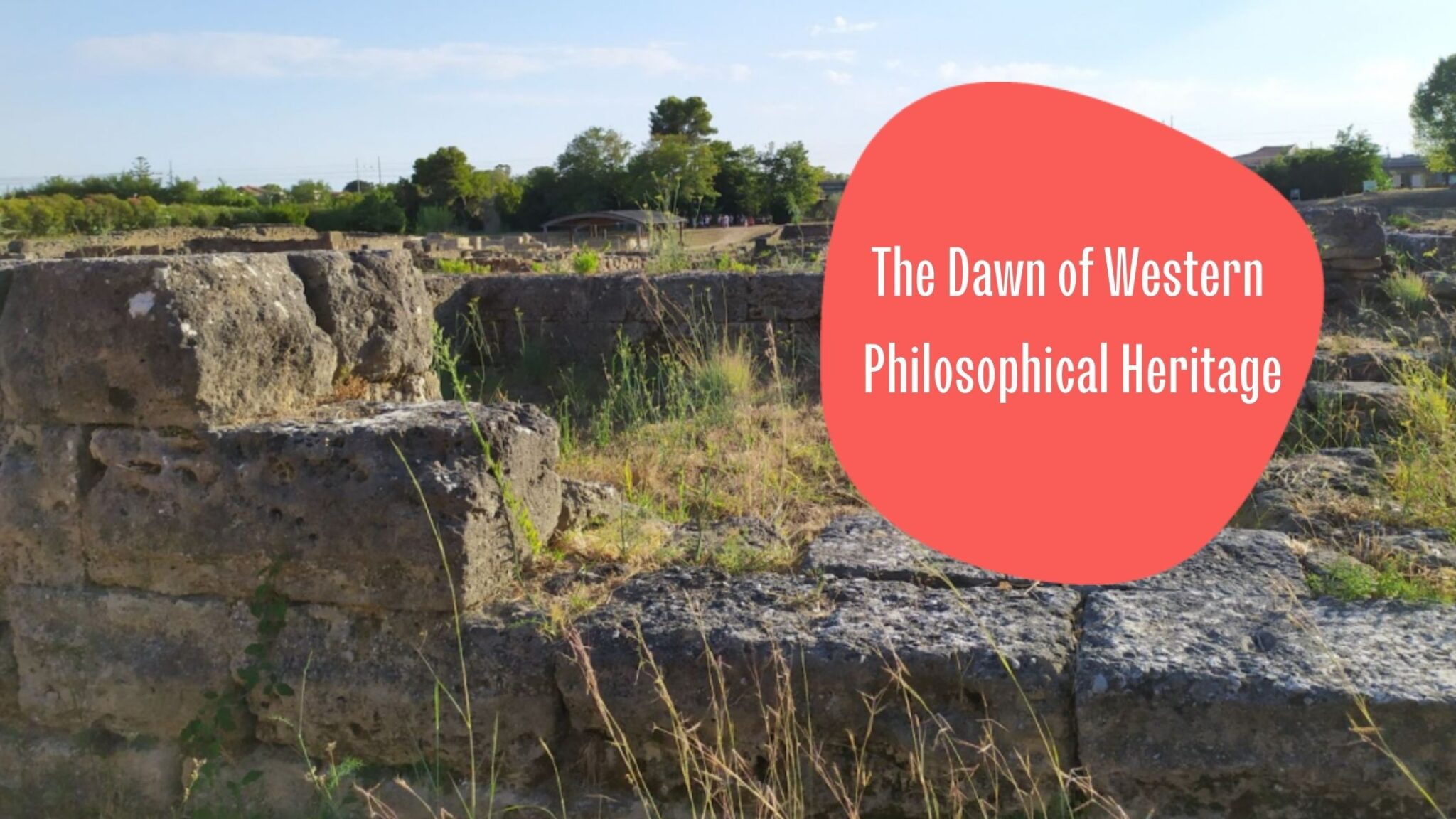
In particular, from the remains of two important cities of the classical era, Paestum and Velia, it is still possible to perceive the origins of one of the most famous philosophical schools of Ancient Greece.
In this area, Parmenides, an ancient Greek philosopher and founder of ontology, gave birth to his famous poem “On Nature,” which can be considered the first true philosophical text in the history of Western thought concerning the conception of human beings within their environment.
These places, still resonating with the thoughts and intuitions of Zeno and Melissus, students of Parmenides, tell a story of attachment to Nature, the desire to live in harmony, the drive to know, discover and become actively involved.
Paestum & Velia
The legacy of the Archaeological Park of Paestum and Velia is a precious testimony to this.
From being the cradle of Greek philosophy, the territory experienced a succession of events that increased its resilience and marked the history of the Mediterranean lifestyle.
Velia, or Elea as it was called before the arrival of the Romans, has in fact always been a symbol of adaptability throughout history.
Its archaeological findings reveal that the city was built and rebuilt over time, adapting to climate conditions and natural disasters.
Other important events in history include the establishment of the Salerno Medical School in the Early Middle Ages, which paved the way for modern Western medicine and hosted the first known female doctor, Turola de Ruggero.
And finally, the “invention” of the Mediterranean Diet, in the Latin sense of the word invenire, meaning to discover, recognise or find.
It is the result of a foreign gaze, that of Ancel and Margaret Keys, who recognised a coherent, healthy and resilient system of life and nutrition, capable of crossing historical eras and cultural intersections to reach the present day.
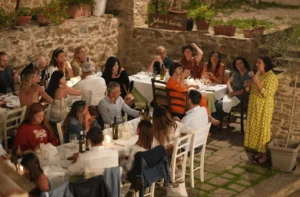
It is for this reason, and because of the full embrace of the knowledge and traditions of the Mediterranean Diet, that today the Centro Studi Dieta Mediterranea “Angelo Vassallo” of the Municipality of Pollica and Future Food Institute have organised a day of meetings in Pollica to celebrate the eleventh anniversary of the recognition of the Mediterranean Diet as UNESCO Intangible Cultural Heritage of Humanity.
11th Anniversary of UNESCO Nomination of Mediterranean Diet
The event marks the beginning of a week of activities culminating in the VI Week of Italian Cuisine in the World, coordinated by the Directorate-General for the Promotion of the Country System of the Italian Ministry of Foreign Affairs, fully aligned with the theme proposed for 2021: “Tradition and Perspectives of Italian Cuisine: Awareness and Enhancement of Food Sustainability.”
On this occasion, hosts, policymakers, professors and experts were physically guided through the places that have made the Mediterranean Diet available to us: the Archaeological Park of Paestum and Velia, as well as the two main museums in the area: The Living Museum of the Mediterranean Diet in Pioppi (Pollica), dedicated to the food model and lifestyle recognised by UNESCO in 2010, and The Virtual Museum of the Mediterranean Diet, which collects stories and testimonials related to the Mediterranean Diet.
These are the places that still allow us to experience the crossroads of knowledge and revolutionary intuitions that, over the centuries, have shaped this immense historical, cultural, philosophical and landscape heritage.