Returning to the time of mindful presence
The economic, social and environmental scenario we are currently experiencing highlights the need to redesign existing production and consumption models in order to achieve more sustainable development. Linear economic models based on the mantra “take-make-dispose” have proven not only less economically efficient than expected, but also damaging to the social and environmental fabric, fuelling conflict, exclusion and unnecessary economic costs.
In an age of maximum performance and instant results, in which we are all connected but few of us are truly united, one aspect has been dangerously neglected: rediscovering the time for presence, beauty and awareness.
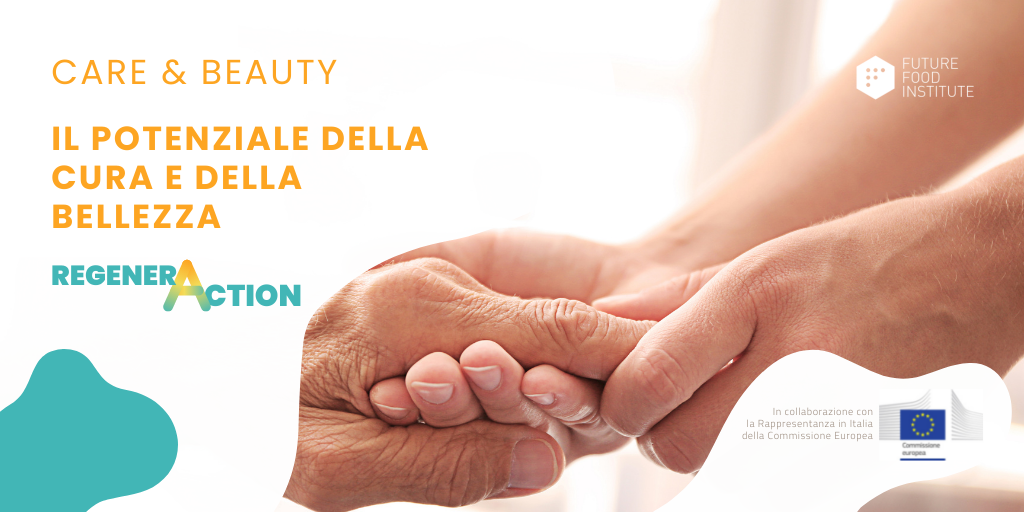
We need more care, understood as active concern, attention and responsibility towards the people and things around us: personal psychological and physical wellbeing, close relationships, the regeneration of real human connections, and the time to once again experience rural environments and urban spaces. All these aspects can create positive ripple effects across the economic and productive dimension, making it genuinely sustainable.
The economy of beauty: an economy that regenerates individuals, society and local economies
Supporting the economy of beauty means taking care of a territory’s natural, cultural, historical, landscape, food and wine, and human heritage. It means adopting attitudes that enhance those aspects which, beyond directly benefiting individuals, positively influence the entire community, the territory and the economic sector.
Today, this mindset has been institutionalised through the One Health Approach, which recognises how closely interconnected human, animal and plant health are. Yet this is essentially the legacy of ancient Mediterranean wisdom, which already understood that Nature has its own rhythms and that respecting them is essential to ensuring nutritional quality and human health.
Data and statistics speak clearly: the deterioration of mental health and the erosion of social cohesion are perceived as among the most serious threats facing the world over the next two years, alongside concerns related to climate change, according to the Global Risk Report 2022.
This is also a major challenge in Italy, especially among young people and students, the most stressed and depressed in Europe.
Returning to open, natural and cultural spaces undoubtedly brings benefits. Today we call it biophilia, which literally means love of life, because unconsciously we know that where there is greenery and nature, there is life. In the past, it was called harmony.
Enhancing this beauty — which in Italy alone is reflected in an invaluable natural, cultural, landscape and historical heritage — also means supporting the economy of the small and very small Italian businesses that make up the rich urban and rural fabric, the true soul of our country, generating 17% of our GDP.
Even at global level, investing in care brings economic returns. For every dollar invested in improving sanitation services, there is an economic return of $5.50 thanks to reduced healthcare costs and increased productivity, according to the World Health Organization (WHO).
Reducing the waste of resources, such as food, also produces proven economic benefits. According to the Italian Institute for Environmental Protection and Research (ISPRA), a 21% reduction in household food waste in the United Kingdom generated an economic return of £250 for every pound invested in the national food waste reduction plan.
Focusing on the care of natural resources, understood as common goods to be enhanced and protected rather than commodified, and putting individuals and their wellbeing back at the centre is therefore beneficial not only for the economy, but also for health and the survival of ecosystems themselves.
Care, assistance and beauty: pillars of the European strategy
Care and beauty are included among the recent measures and strategies adopted by the European Union to accelerate the regional ecological, climate and health transitions.
In particular, while implementing the Sustainable Development Goals included in the 2030 Agenda — especially Sustainable Development Goal 3, SDG3, on health and wellbeing — the European Commission is taking action to reduce maternal and infant mortality, improve women’s access to sexual and reproductive healthcare, and achieve universal health coverage.
The EU is also a major contributor to international health initiatives: since 2002, it has committed more than €2.6 billion to the Global Fund to Fight AIDS, Tuberculosis and Malaria and is actively working to strengthen regional healthcare systems by combining national ownership with regional coherence.
In addition, the adoption of a new care strategy for long-term care is planned for the third quarter of 2022, with the aim of strengthening gender equality and social equity through accessible and affordable care services for children and individuals requiring long-term assistance.
Further evidence can be found in the European commitment to include the Human Development Index — living a long and healthy life, being knowledgeable and enjoying a decent standard of living — as an ultimate criterion for evaluating a country’s development.
As for the concept of beauty, in January 2021 the co-design phase of the New European Bauhaus was launched, with the aim of identifying and reflecting on aesthetic, sustainable and inclusive solutions for our spaces and contributing to the implementation of the Green Deal.
The movement aims to foster interdisciplinary collaboration to rethink how all environments are designed and built, moving beyond the narrow field of construction and involving cross-disciplinary knowledge and practices.
When care drives development
Future Food Institute is at the forefront of this transition toward rethinking the parameters and standards of good living, individual health and the health of the environments in which people live: a new humanism for development.
By placing care and beauty back at the centre, we can plant the seeds of integral ecological awareness and transform the food chain into a value chain.
Starting from food and the values it represents, we can create an ecosystem capable of generating genuinely sustainable, participatory and holistic forms of development, designed for the collective good through models of inclusive prosperity.
Italy is home to an invaluable artistic and cultural heritage made up of great works and monuments, but also of the hidden threads found in kitchens, squares, villages, microclimates, history and local identities that help make the “Bel Paese” rich in the nuances and details admired around the world.
An invaluable heritage to preserve and protect, yet one that is so often underestimated, misunderstood and wasted.
Spreading a new mindset, that of Prosperity Thinking, is a commitment that the Future Food Institute has pursued since its foundation through scientific research, but also by implementing real, participatory and holistic transformation in the field.
This takes place through events, meetings and debates, as happened during the Sustainable Gastronomy Day, in the discussions of Good After Covid, and every day through our Living Lab in Pollica.
Pollica (SA), UNESCO Emblematic Community of the Mediterranean Diet, and its local administration represent a virtuous example of how such beauty can be made accessible and usable while also being protected and cared for.
A village nestled between the sea and the mountains, faced with challenges such as depopulation and climate change, chooses to respond with courage by continuing to invest in landscape care, the enhancement of territorial heritage, improved services and the regeneration of agricultural areas in order to encourage people to stay and attract forms of slow and responsible tourism, regenerating rather than distorting the territory.
Pollica’s commitment fascinated and inspired us, leading us to contribute through the Paideia Campus — an experimental hub where people can learn about and directly experience the Mediterranean way of life.
Pollica has thus become an open-air regeneration campus designed to promote hands-on learning and to demonstrate that by starting from care and beauty, it is possible to trigger cross-cutting, positive-sum processes and mechanisms capable of making human, cultural and natural heritage not only alive, but truly living.
Care, beauty and presence therefore return to centre stage during European Agrifood Week as well, through meetings, debates, in-depth discussions and concrete planning initiatives, such as the Mediterranean Wine Art Festival, the One Health Approach applied to the Mediterranean, and the protection of supply chains and new production paradigms for economic regeneration.
Follow us on Twitter